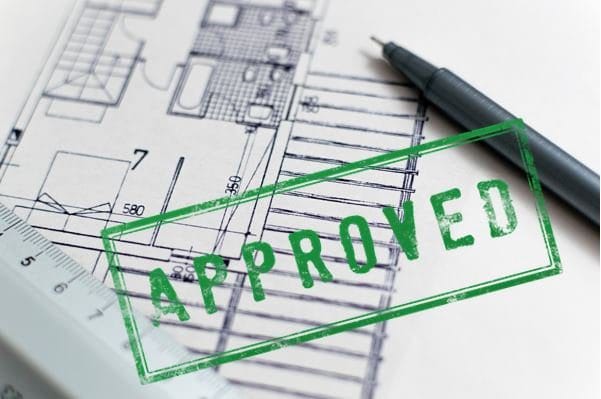
The Main Types of Planning and Related Applications You Can Apply For
- Householder planning consent
- Full planning consent
- Outline planning consent
- Reserved Matters
- Listed building consent
- Advertisement consent
- Lawful Development Certificate (LDC)
1. Householder Planning Consent Applications
Householder Planning Applications offer a streamlined and simplified process for homeowners looking to alter or extend their single-family home (excluding flats). This includes any works within the property’s boundary or garden, making it an ideal option for those seeking to enhance their living space.
However, this process is not applicable for proposals affecting flats, multiple houses, or changes of use. In such cases, a Full Planning Permission request will be required.
It’s important to note that not all home improvement projects require planning permission. Many common household building projects fall under Permitted Development Rights, which allow homeowners to proceed without formal approval. However, the scope of permitted development is subject to specific limitations and conditions, so it’s essential to verify eligibility before starting any work.
This framework ensures flexibility for homeowners while maintaining clear boundaries for more complex or impactful projects.
Exclusions
Changes to a house could fall under the remit of Permitted Development. This does not require planning permission but may need prior approval. Completing work under Permitted Development will require you to adhere to specific criteria.
Examples of work which may be contained in Permitted development rights include:
- Small extensions to your home
- Building a porch
- Replacement of chimneys
- Internal alterations
- Loft conversions and roof lights
2. Full Planning Consent Applications
A Full Planning Application is essential for detailed development proposals that fall outside the scope of householder applications or permitted development rights. This typically applies to new buildings of any kind, as well as commercial projects.
Common scenarios requiring Full Planning Permission include:
- Structural alterations or extensions to existing buildings.
- Any works involving flats.
- Proposals to change the number of dwellings (e.g., flat conversions, constructing a separate house in the garden).
- Changes to the use of part or all of a property for non-residential purposes.
- Developments outside the property’s garden or boundary.
- Demolition or rebuilding of structures.
- Other significant construction work typically carried out by builders.
Full planning applications are submitted once all project details are finalized and the development is deemed viable.
Additionally, planning permission is usually required for any proposed change of use for buildings or land, ensuring compliance with local regulations and planning policies. This process provides a clear framework for more complex or impactful projects, safeguarding both individual and community interests.
Certain building works are not classified as ‘development‘ and, as a result, do not require planning permission. These typically include maintenance, internal improvements, or alterations that do not ‘materially affect’ the external appearance of the building.
Examples of works that may not require planning permission include:
- Internal building works, such as renovations or reconfigurations.
- Minor external alterations, like installing alarm boxes or satellite dishes.
- Erecting boundary walls or fences below a specified height.
- Changes of use that are incidental to the existing use of the property.
- Certain agricultural or forestry-related activities.
While these works may not need planning permission, it’s important to note that Building Regulations approval may still be required before starting any project. This ensures that all work meets safety, accessibility, and structural standards, even if planning consent isn’t necessary.
This distinction allows homeowners and property owners to undertake smaller-scale projects with greater flexibility, while still maintaining essential regulatory oversight.
3. Outline Planning Permission Consent
Outline Planning Applications are a strategic tool used to determine whether the core principles of a proposed development are acceptable in principle. This approach helps assess the viability of a project upfront, providing clarity and confidence before committing to detailed plans.
Key details, known as reserved matters, such as design, layout, and scale, can be finalized and approved at a later stage. If the outline application is successful, planning permission can be granted subject to the condition that these reserved matters are approved before any development begins.
This two-step process allows developers and landowners to test the feasibility of their proposals early on, reducing risk and ensuring alignment with local planning policies before investing in detailed designs. It’s a flexible and efficient way to navigate the planning process for larger or more complex projects.
What Can Be a Reserved Matter?
Reserved matters are specific details that can be deferred and approved at a later stage under an Outline Planning Permission. These typically include:
- Appearance: The visual aspects of a building or site, particularly the exterior design and how it integrates with its surroundings.
- Means of Access: The accessibility of all routes to, from, and within the site, including connections to existing roads and pathways.
- Landscaping: Enhancements or protections to the site’s amenities, such as planting trees, hedges, or other features to improve aesthetics or provide screening.
- Layout: The arrangement of buildings, routes, and open spaces within the development, and how they relate to structures and areas outside the site.
- Scale: The size of the development, including the height, width, and length of proposed buildings.
Reserved matters can be deferred in their entirety or on an individual basis, depending on the level of detail known at the initial application stage.
The Local Planning Authority (LPA) determines what constitutes sufficient detail for approval. Engaging with your local authority early through pre-application advice can provide clarity on their requirements and streamline the process. This proactive step can significantly enhance the efficiency of your application. Be prepared, as the LPA may request additional details after submission to ensure compliance with planning standards.
This structured approach allows developers to secure initial approval while retaining flexibility to refine key aspects of the project at a later stage.
4. Reserved Matters
When Approval of Reserved Matters is required.
Approval of Reserved Matters is a critical step in the planning process, but it can only be pursued if the applicant already holds Outline Planning Permission for the development. It is not a stand-alone application and cannot be used to secure planning permission independently.
Outline Planning Applications serve as an initial step to determine whether the fundamental principles of a development are acceptable. This helps assess the project’s viability upfront, providing a foundation for further refinement. Specific details, known as reserved matters, are deferred and addressed at a later stage.
Once outline planning consent is granted, an Application for Approval of Reserved Matters must be submitted to finalize the right to develop. This application addresses the outstanding details omitted from the outline application, including:
- Appearance: The visual aspects of the development, particularly its exterior design and how it integrates with its surroundings.
- Means of Access: The accessibility of all routes to, from, and within the site, including connections to existing roads and pathways.
- Landscaping: Enhancements or protections to the site’s amenities, such as planting trees or hedges for screening or aesthetic improvement.
- Layout: The arrangement of buildings, routes, and open spaces within the development, and their relationship to surrounding structures and areas.
- Scale: The size of the development, including the height, width, and length of each proposed building.
The reserved matters application must align with the conditions and parameters set out in the outline approval. If the proposals have changed significantly, a new application for Outline or Full Planning Permission may be required.
At the outline stage, some details may have already been submitted and approved, depending on the applicant’s choice or the council’s requirements. The Outline Decision Notice, issued by the council, will clearly specify which matters were reserved for later approval, providing a roadmap for the next steps in the planning process.
This structured approach ensures clarity and flexibility, allowing developers to refine their proposals while adhering to the initial approval framework.
5. Listed Building Consent
Listed Building Consent is a specialized form of planning control designed to protect buildings of exceptional architectural or historical significance. These safeguards are in addition to standard planning regulations and can impose stricter requirements. For instance, listed building status may necessitate planning permission for works that would otherwise be exempt, such as the erection of boundary walls or fences.
The controls apply to any proposed works involving the demolition, alteration, or extension of a listed building, particularly if such changes could impact its unique character or heritage value. This ensures that the building’s special qualities are preserved for future generations.
It’s important to note that carrying out work on a listed building without obtaining the necessary consent is a criminal offence. This underscores the importance of securing Listed Building Consent before undertaking any work, no matter how minor it may seem.
By adhering to these regulations, property owners can contribute to the preservation of the UK’s architectural and historical heritage while avoiding legal repercussions. Always consult with your local planning authority to ensure compliance with these vital protections.
What is a listed building?
A listed building is a building, structure, or object deemed to be of national importance due to its exceptional architectural or historic significance. It is included on a special register known as the List of Buildings of Special Architectural or Historic Interest, which ensures its protection for future generations.
Buildings are listed to safeguard the physical evidence of our past, preserving structures that are cherished as vital elements of our cultural heritage and collective identity. These historic buildings enrich our lives, contributing to the unique character and charm of our towns, villages, and countryside. They serve as enduring reminders of our history, enhancing the beauty and diversity of the places we live in and visit.
By protecting listed buildings, we not only honor our heritage but also ensure that these irreplaceable treasures continue to inspire and connect us to our shared past.
6. Advertisement Consent
What is an ‘advertisement’?
The term ‘advertisement’ covers a wide range of advertisements and signs including:
- Posters and notices
- Placards and boards
- Fascia signs and projecting signs
- Pole signs and canopy signs
- Models and devices
- Advance signs and directional signs
- Estate agents’ boards
- Captive balloon advertising (not balloons in flight)
- Flag advertisements
- Price markers and price displays
- Traffic signs
- Town and village name-signs
Memorials and railway signals are not regarded as advertisements.
When is advertisement consent required?
Types of Advertising Requiring Advertisement Consent
Certain types of advertisements typically require Advertisement Consent from the local planning authority. These include:
- Illuminated signs (in most cases).
- Advertisements displayed on specialised structures, such as poster hoardings or non-highway authority roadside signs (e.g., advance warning or directional signs).
- Signs positioned above 4.6 metres on buildings, particularly above the bottom of first-floor windows or on gable ends.
When evaluating applications for advertisement consent, local authorities focus solely on two key considerations: ‘amenity’ (the visual impact on the surrounding area) and ‘public safety’ (ensuring the advertisement does not pose a hazard).
Exemptions and Deemed Consent
Not all advertisements are regulated by the planning authority. Some benefit from ‘deemed consent’, meaning they do not require explicit permission, depending on factors such as size, position, and illumination. However, certain advertisements will always need consent.
Special Considerations for Listed Buildings
Extra care must be taken when displaying signs on or near listed buildings to ensure they do not detract from the building’s character and appearance. Even advertisements that would normally be permitted under standard regulations require separate Listed Building Consent if they are attached to a listed building.
This framework ensures that advertising respects the visual and historical integrity of our surroundings while balancing the needs of businesses and public safety. Always check with your local authority to confirm whether your advertisement requires consent.
7. Lawful Development Certificate
What is a Lawful Development Certificate?
A Lawful Development Certificate (LDC) is a formal legal document issued by the Local Planning Authority (LPA) that confirms the lawfulness of a building’s past, present, or future use, operations, or other matters. If granted, the certificate provides assurance that enforcement action cannot be taken against the development or use specified in the certificate.
However, it’s important to note that an LDC does not offer blanket protection. If the specified use or development is materially changed without obtaining the necessary planning permission, the planning authority may still take enforcement action.
It’s also crucial to understand that a successful LDC application is not a substitute for planning permission. If your development or use falls outside the scope of the LDC, you must still apply for separate planning permission to ensure compliance with planning regulations.
An LDC provides clarity and legal certainty, making it a valuable tool for property owners and developers seeking to confirm the lawfulness of their projects. Always consult with your local planning authority to ensure your development or use is fully compliant.
When to apply for a Lawful Development Certificate
An application for a Lawful Development Certificate (LDC) is a vital tool to establish the lawfulness of a property’s use or development. It should be used to determine whether:
- An existing use of land, operational development, or activity in breach of a planning condition is lawful.
- A proposed use of buildings or land, or planned operations (on, over, or under land), would be lawful.
A use or development is considered lawful if:
- No enforcement action can be taken against it—either because planning permission was not required or because the time limit for enforcement has expired.
- The requirements of any current enforcement notice are not being violated.
When to Apply for an LDC:
- To confirm whether a proposed permitted development is lawful.
- When planning enforcement action is taken by the Local Planning Authority (LPA), and the owner believes the development is immune due to the expiry of the enforcement time limit.
- During the sale of land or property, if planning permission was never granted, and the owner needs to demonstrate to a prospective buyer that no enforcement action can be taken.
An LDC application is also useful in complex cases involving intensification of use, where the existing use is difficult to define, such as:
- Secondary uses
- Mixed uses
- Intensification of an existing use
- Sub-division of the planning unit
By securing an LDC, property owners can gain legal certainty and protect themselves from potential enforcement actions, ensuring peace of mind for both current and future use of the land or building. Always consult with your local planning authority to confirm the specifics of your situation.

Proposed Development - Planning Permsion
Planning Permission Can Save You Time and Money
Applying for planning permission can be a complex and challenging process. Understanding what planning permission is, why it is necessary, and who grants it is essential in navigating through the different types of applications. We offer expertise in full planning permission and listed building consent to help ensure the success of your project. Discover the benefits of planning permission and how our services can save you time and money. Contact Us to find out more.


Table of content
- The Main Types of Planning and Related Applications You Can Apply For
- 1. Householder Planning Consent Applications
- 2. Full Planning Consent Applications
- 3. Outline Planning Permission Consent
- 4. Reserved Matters
- 5. Listed Building Consent
- 6. Advertisement Consent
- 7. Lawful Development Certificate
- Planning Permission Can Save You Time and Money